Why Your Website Gets Traffic But No Leads
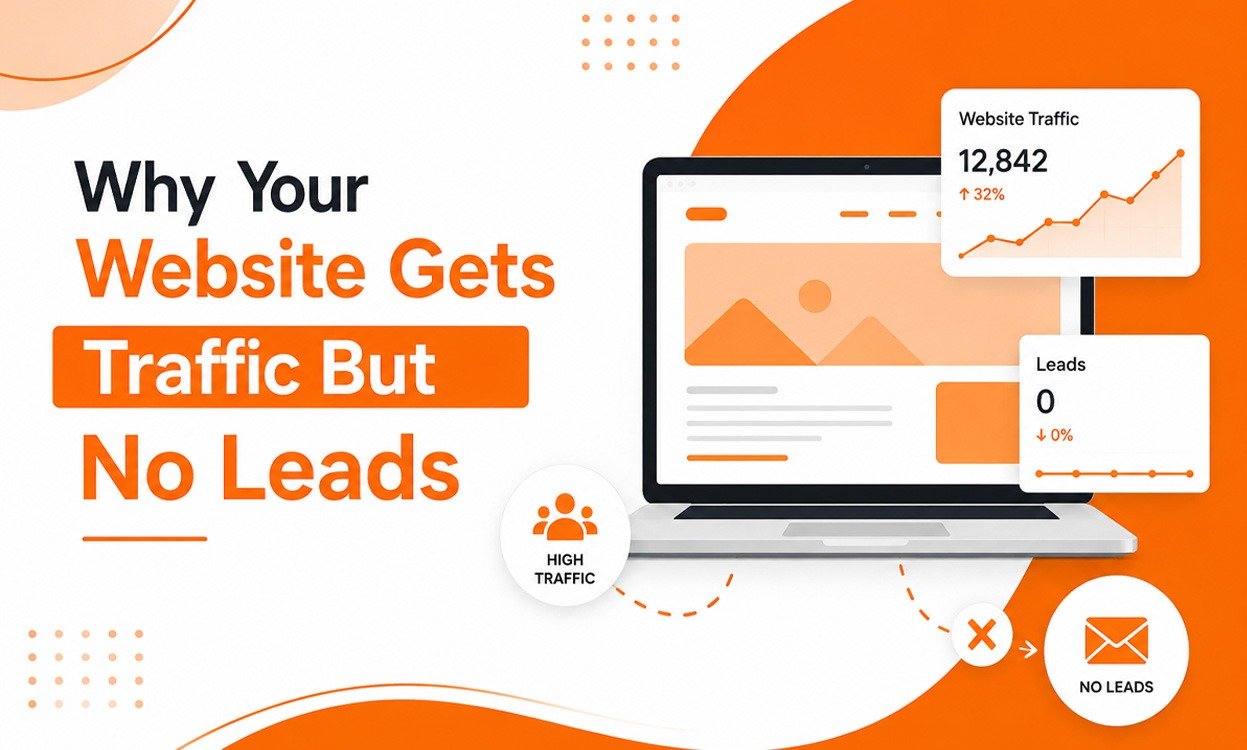
Getting visitors to your website is a great achievement. It shows that your SEO, social media, paid ads, or content marketing efforts are bringing people to your business. But what happens when hundreds or even thousands of people visit your website every month and still no one contacts you, fills out a form, or makes a purchase?
This is one of the most common challenges businesses face today. Many websites receive a steady flow of visitors but struggle to turn them into customers. This is where Website Traffic But No Leads becomes a serious business problem. Traffic alone does not grow a business. What truly matters is how many visitors take action after arriving on your website.
The good news is that this issue can usually be fixed. With the right improvements in user experience, website design, content, and Conversion Optimization, you can turn more visitors into qualified leads without increasing your marketing budget.
In this guide, we'll explore why websites fail to generate leads and how simple improvements can help increase conversions and business growth.
Traffic Is Only the Beginning
Many business owners believe that getting more visitors will automatically increase sales. While traffic is important, it is only the first step in the customer journey.
Imagine opening a beautiful store in a busy market. Hundreds of people walk in every day, but they leave without buying anything. The problem is not the number of visitors—it is the shopping experience inside the store.
The same principle applies to websites. Visitors may find your website through Google Search, paid advertisements, social media campaigns, or referral links. However, if they don't immediately understand what you offer or why they should trust you, they will leave within seconds.
A successful website guides visitors naturally toward taking action. Whether the goal is requesting a quote, booking a consultation, downloading a brochure, or making a purchase, every page should encourage the next step.
Your Website Doesn't Match Visitor Intent
One of the biggest reasons websites fail to generate enquiries is because they don't satisfy the visitor's expectations.
When someone searches online, they already have a specific problem they want to solve. If your webpage doesn't answer that problem quickly, visitors will simply return to the search results and choose another website.
For example, someone searching for "affordable digital marketing services for small businesses" expects pricing information, service details, success stories, and an easy way to contact your team.
If instead they land on a homepage filled with generic marketing phrases, confusing menus, or lengthy introductions, they may leave without exploring further.
Creating pages that match search intent improves user engagement and supports better Lead Generation because visitors find exactly what they came for.
Slow Websites Drive Visitors Away
Speed has become one of the most important ranking and conversion factors.
Modern users expect websites to load almost instantly. Even a few extra seconds can increase bounce rates and reduce enquiries.
Large images, unnecessary animations, outdated code, and poor hosting often make websites slower than expected.
A fast-loading website not only improves the user experience but also builds trust. Visitors feel more confident interacting with websites that respond quickly and work smoothly across all devices.
Search engines also reward faster websites with better visibility, making website performance an essential part of long-term growth.
Weak Calls-to-Action Create Confusion
Sometimes visitors are interested in your services but simply don't know what to do next.
Many websites either hide their contact buttons or use vague messages like "Learn More" instead of encouraging meaningful action.
An effective call-to-action should clearly explain what visitors will receive.
Examples include:
- Get a Free Consultation
- Request a Custom Quote
- Schedule a Demo
- Talk to Our Experts
Clear CTAs reduce confusion and encourage visitors to move forward in the buying journey.
Instead of placing one button at the bottom of the page, include relevant calls-to-action naturally throughout important sections where visitors are most engaged.
Your Website Builds Little Trust
People rarely buy from businesses they don't trust.
When visitors land on a website for the first time, they immediately look for signals that prove the business is genuine and experienced.
If your website lacks customer testimonials, case studies, client logos, certifications, reviews, or real company information, visitors may hesitate before sharing their contact details.
Trust is especially important for service-based businesses where customers invest significant money before seeing results.
Displaying authentic success stories, verified reviews, awards, and real project examples helps visitors feel confident that your business can deliver what it promises.
These trust signals improve both customer confidence and overall CRO efforts by reducing hesitation during the decision-making process.
Poor User Experience Reduces Conversions
A visitor should never struggle to find information on your website.
Complicated navigation, cluttered layouts, unreadable fonts, and inconsistent page design create frustration that causes users to leave.
Good website design is simple. Visitors should immediately understand:
- What your business offers
- Who your services are for
- Why they should choose you
- How they can contact you
When every page follows a logical structure with clear headings, readable content, and mobile-friendly design, visitors stay longer and explore more pages.
Better user experience naturally improves engagement, reduces bounce rates, and supports higher conversion rates without requiring additional advertising spend.
Content Focuses on the Business Instead of the Customer
Many websites spend too much time talking about themselves.
Visitors are less interested in how long your company has existed and more interested in how you can solve their problems.
Instead of writing only about your services, explain the benefits customers receive.
For example, rather than saying:
"We offer professional digital marketing services."
Explain the outcome:
"Our strategies help businesses generate qualified enquiries, improve online visibility, and increase revenue through data-driven marketing."
Customer-focused content keeps readers engaged and encourages them to continue exploring your website.
It also supports stronger search engine rankings because valuable, relevant content aligns with what users are actually searching for.
Every Page Should Have a Clear Purpose
One common mistake is trying to achieve too many goals on a single page.
A homepage should introduce your business.
A service page should explain one specific service.
A landing page should focus on generating enquiries.
A blog should educate visitors while naturally guiding them toward your services.
When every page has one primary objective, visitors are less distracted and more likely to complete the desired action.
This structured approach strengthens overall website performance and lays the foundation for better conversion results.
Mobile Users Need a Better Experience
Today, most website visitors come from smartphones. If your website looks perfect on a desktop but is difficult to use on a mobile device, you could be losing a large number of potential customers.
Small text, buttons that are hard to tap, images that don't fit the screen, and slow loading pages can quickly frustrate users. Many visitors won't wait for a poor website to improve—they'll simply leave and visit a competitor.
A mobile-friendly website should be easy to navigate with one hand, load quickly, and make it simple to contact your business. Whether someone wants to call, send a message, or fill out a contact form, the process should take only a few moments.
Improving the mobile experience is one of the simplest ways to increase enquiries without spending more on advertising.
Your Contact Form May Be Turning Visitors Away
A contact form is often the final step before a visitor becomes a lead. Unfortunately, many businesses make this step more difficult than it needs to be.
Long forms that ask for unnecessary information can discourage users from completing them. If someone only wants to ask a question or request a quote, they shouldn't have to fill in ten different fields.
Keep your forms simple and ask only for the information you actually need. A name, email address, phone number, and a short message are usually enough to start the conversation.
It's also important to reassure visitors that their information will remain private. A small trust message near the form can make people feel more comfortable submitting their details.
Small improvements like these often lead to better Conversion Optimization without making major changes to your website.
Measure Visitor Behaviour Instead of Guessing
Many businesses make website changes based on assumptions instead of real data.
Understanding how visitors interact with your website helps you identify where people lose interest. You may discover that users leave a page after only a few seconds or abandon the contact form before submitting it.
By monitoring visitor behaviour, click patterns, bounce rate, session duration, and page performance, you can make informed decisions instead of guessing.
Regular analysis allows you to improve pages gradually. Even small adjustments to headlines, images, layouts, or calls-to-action can produce noticeable improvements over time.
Successful websites are rarely built once and forgotten. They continue evolving based on real user behaviour and business goals.
Build Trust Throughout the Customer Journey
Visitors don't decide within a few seconds whether to become customers. They build confidence as they move through your website.
Every page should answer common questions and remove doubts. Clear service descriptions, transparent pricing where appropriate, frequently asked questions, genuine customer feedback, and easy-to-find contact details all help create confidence.
People are more likely to contact businesses that appear professional, reliable, and transparent.
Instead of trying to impress visitors with complicated designs or technical language, focus on making every page helpful and easy to understand. Trust grows when visitors feel that your business genuinely understands their needs.
Focus on Quality Leads Instead of More Traffic
Many companies believe that increasing website traffic will automatically solve their sales problems. In reality, attracting the right audience is far more valuable than attracting a large audience.
If your website reaches people who are genuinely interested in your products or services, they are much more likely to become customers.
Creating useful content, targeting relevant search terms, improving page relevance, and aligning your messaging with customer needs all contribute to stronger Lead Generation over time.
When visitors find exactly what they are looking for, conversions happen naturally.
Turn Visitors into Customers with Smart Website Improvements
If you're facing the challenge of Website Traffic But No Leads, remember that the solution isn't always spending more on ads or publishing more content.
Often, the answer lies in improving the experience visitors have once they arrive on your website.
A faster website, customer-focused content, clear navigation, strong trust signals, simple contact forms, and thoughtful page design can significantly improve results. These improvements work together to create a smoother journey from visitor to customer.
Rather than chasing more clicks, focus on helping the people who already visit your website. Even a small increase in your website's conversion rate can generate more enquiries and better business growth without increasing your marketing budget.
When every page is designed with the user in mind, your website becomes more than just an online presence—it becomes a reliable tool for generating business opportunities.
Blog FAQs
Frequently Asked Questions
Your website may attract visitors, but if it has slow loading speed, unclear calls-to-action, poor user experience, or content that doesn't meet visitor intent, people are likely to leave without becoming leads.
Focus on creating valuable content, improving page speed, simplifying contact forms, adding trust signals like reviews, and using clear calls-to-action to encourage visitors to contact your business.
Conversion Optimization is the process of improving your website so more visitors take meaningful actions, such as filling out a form or requesting a quote. It helps you get better results from your existing traffic.
Yes, A fast-loading website keeps visitors engaged, improves their browsing experience, reduces bounce rates, and increases the chances of turning visitors into potential customers.
SEO can bring qualified traffic to your website, but generating leads also depends on your website's design, content, user experience, and how effectively you guide visitors toward taking action.