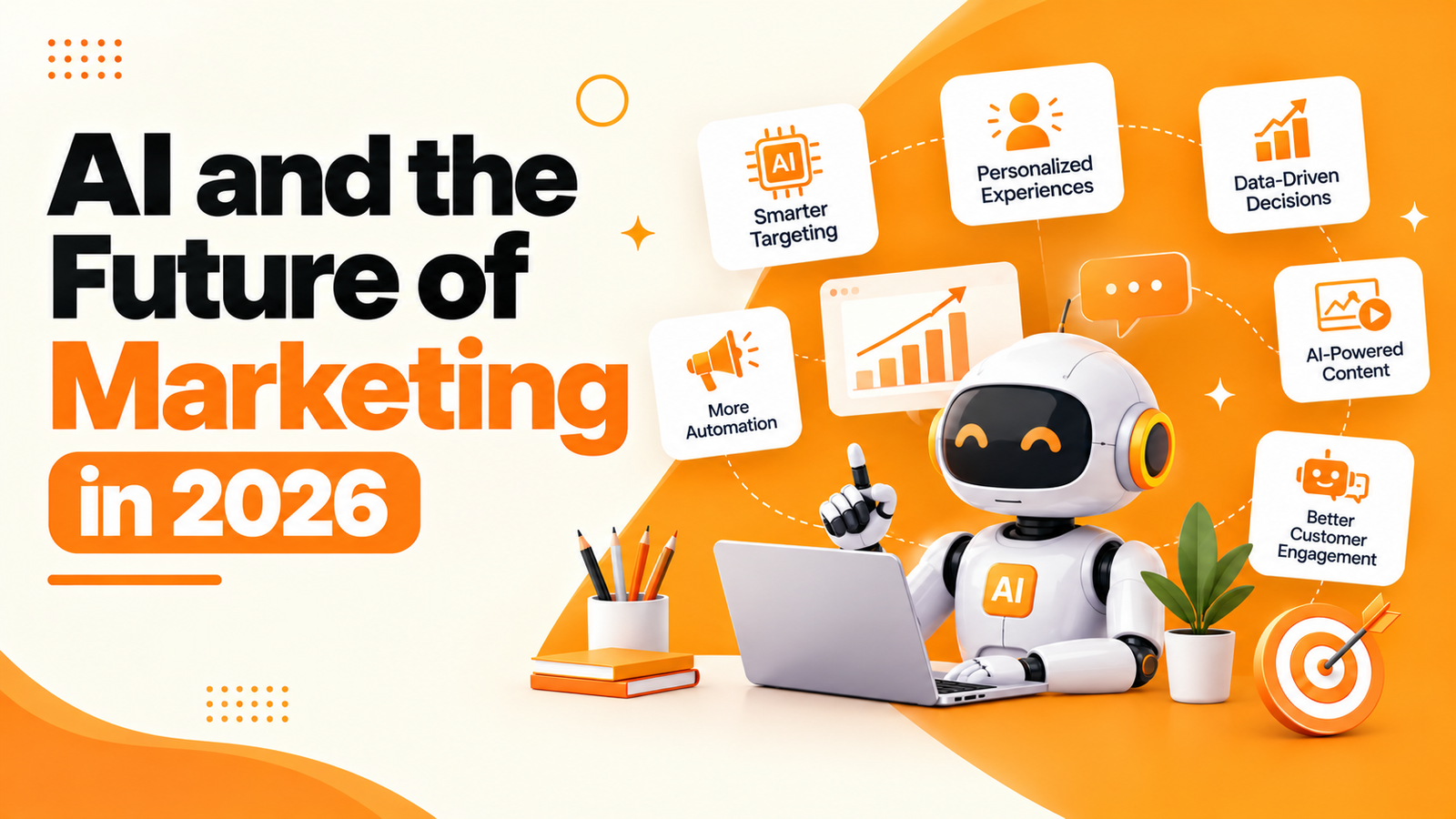
AI and the Future of Marketing in 2026: What’s Really Changing
If you feel like marketing has sped up beyond recognition in the last two years, you’re not imagining things. AI stopped being a “nice-to-have experiment” and became the quiet engine running behind almost every serious campaign.
In 2026, the question is no longer “Should we use AI?” It’s “How do we use it without losing the human edge that actually converts customers?”
This post breaks down what’s actually shifting in AI-powered marketing right now, which trends are worth your time, and how businesses (and agencies) can stay ahead without drowning in tools.
Why 2026 Feels Different
Earlier AI tools mostly helped with writing drafts or generating images. Today the technology has moved into decision-making.
We’re seeing:
- AI systems that can plan, launch, and optimise campaigns with minimal human input (often called agentic AI)
- Search engines and chat platforms answering questions directly, so fewer people click through to websites
- Personalisation that goes far deeper than “Hi [First Name]”
The marketers who treat AI as just another content tool will fall behind. The ones who treat it as a strategic layer will pull ahead.
The Biggest AI Marketing Shifts Happening in 2026
1. From SEO to GEO and AEO
Traditional search engine optimisation is no longer enough.
Google’s AI Overviews, ChatGPT, Perplexity, and other answer engines now give users direct answers. Brands need visibility inside those answers, not just on the classic blue links.
This is where Generative Engine Optimization (GEO) and Answer Engine Optimization (AEO) come in. The goal is to become the source that AI systems trust and cite. Structured content, clear definitions, original data, and strong entity signals matter more than ever.
2. Agentic AI Is Moving from Pilot to Production
Many teams experimented with AI agents in 2025. In 2026, more agencies and brands are letting them handle real workflows — audience research, creative testing, budget allocation, and even basic reporting.
The catch? These agents are only as good as the data and strategy you feed them. Garbage in still means garbage out.
3. First-Party Data Becomes Non-Negotiable
Third-party cookies continue to fade. Privacy rules keep tightening. The brands winning right now are the ones who collect first-party data ethically through value exchanges — useful tools, exclusive content, loyalty programmes, or better experiences.
AI personalisation without good first-party data is just expensive guessing.
4. Content That Works for Both Humans and Machines
The best-performing content in 2026 does two jobs at once:
- Answers a real human question clearly and helpfully
- Is structured so AI systems can easily extract and cite it
That means clean headings, short definition-style paragraphs, original insights, and tables or lists where they make sense.
5. Measurement Beyond Clicks
Zero-click searches are rising. If your only success metric is website traffic, you’re missing the full picture. Smart teams now track AI citations, brand mentions in answer engines, assisted conversions, and overall share of voice across platforms.
Practical Ways to Use AI in Marketing Without Losing Your Soul
Here are the approaches that are actually working for agencies and in-house teams this year:
- Use AI for the heavy lifting, humans for the strategy and final voice. Let AI draft 10 versions of ad copy or analyse thousands of customer comments. Then have a real person choose, refine, and add the insight that only experience can bring.
- Build topic clusters around problems your ideal clients actually face. AI can help research and outline, but the unique case studies and opinions should come from your team.
- Test AI-generated creative ruthlessly. What looks polished can still underperform. Keep human judgement in the loop for brand voice and emotional resonance.
- Create content that AI systems want to cite. Original research, clear frameworks, and practical checklists travel further than generic “10 tips” posts.
- Train your team on prompting and verification. The skill gap is no longer “Can you use ChatGPT?” It’s “Can you get reliable, on-brand output and fact-check it quickly?”
What Still Matters More Than Any Tool
AI can write faster than any human. It can analyse data at a scale no team can match.
But it still cannot:
- Truly understand the quiet fears and ambitions of your specific customers
- Build long-term trust the way consistent, honest communication does
- Make the final call when brand reputation is on the line
The agencies and brands that will win in 2026 are the ones that treat AI as a powerful assistant, not a replacement for clear thinking and genuine customer understanding.
How Businesses Should Prepare Right Now
- Audit your current content for AI search readiness (structure, originality, entity clarity).
- Start collecting and organising first-party data properly.
- Decide which repetitive marketing tasks can safely be handed to AI agents.
- Upskill your team on the difference between using AI and using AI well.
- Keep measuring what actually moves the business, not just vanity metrics.
Final Thought
AI is not coming for marketing jobs the way many feared. It’s coming for the boring, repetitive parts of those jobs.
The future belongs to marketers who can direct the technology, interpret its output, and still deliver the human insight that turns attention into trust — and trust into revenue.
If you’re a business owner or marketing leader trying to figure out exactly where AI fits into your strategy without wasting budget on shiny tools that don’t convert, we help companies do exactly that every day.
Want a clear, practical roadmap for using AI in your marketing without the hype?
Reach out. Let’s talk about what will actually move the needle for your business in 2026.