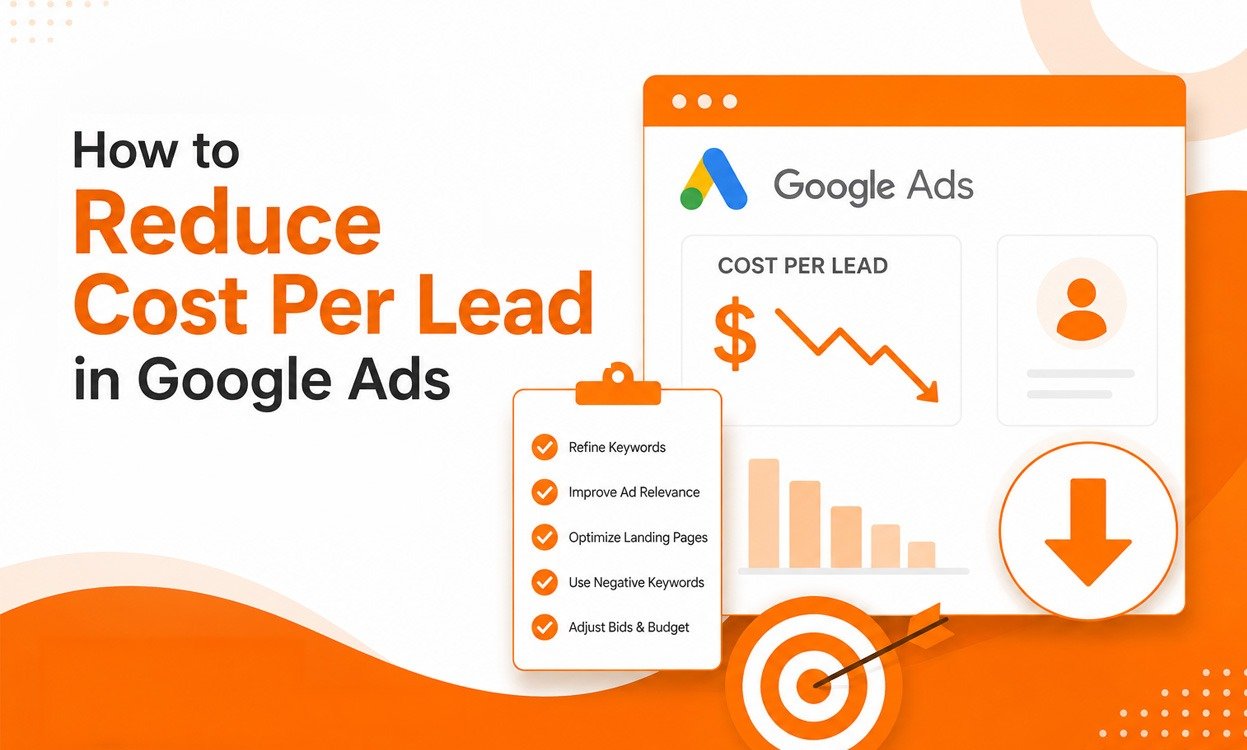
How to Reduce Cost Per Lead in Google Ads
Getting more leads without increasing your advertising budget is one of the biggest goals for every business. Many companies spend a large amount on Google Ads but still struggle to generate quality leads at an affordable price. The good news is that improving your campaign performance does not always require a bigger budget. Small improvements in strategy, targeting, and ad quality can make a significant difference.
If your campaigns are generating clicks but not enough conversions, it is time to focus on optimization rather than spending more. A well-planned campaign attracts the right audience, improves conversion rates, and helps you get better results from every rupee invested.
In this guide, you'll learn practical ways to Reduce Cost Per Lead without sacrificing lead quality. Whether you're managing campaigns for a local business, an eCommerce store, or a service-based company, these proven techniques can help improve your advertising performance while keeping your budget under control.
Why Cost Per Lead Matters More Than Clicks
Many advertisers celebrate getting thousands of clicks, but clicks alone do not grow a business. A campaign becomes successful when those visitors turn into enquiries, phone calls, form submissions, or sales.
Imagine paying for hundreds of visitors who leave your website without taking any action. Even if your traffic looks impressive, the campaign is not delivering real value. Instead of focusing only on click volume, businesses should measure how much they spend to acquire each qualified lead.
When you regularly monitor campaign performance and improve weak areas, you naturally begin to Lower CPC while increasing the number of valuable conversions. This balance helps businesses scale their advertising without wasting their budget.
Start with High-Intent Keywords Instead of Broad Searches
One of the biggest reasons advertisers overspend is poor keyword selection. Choosing broad keywords often attracts people who are only researching instead of looking to buy.
Instead, focus on search terms that clearly show purchase or enquiry intent. People searching for specific services, products, or solutions are much more likely to convert than users looking for general information.
Long-tail keywords often bring highly qualified visitors because they match what users actually want. They usually face less competition and can deliver stronger conversion rates.
Some related search phrases that naturally support your campaign include:
- affordable Google Ads strategy
- improve Google Ads performance
- qualified leads
- conversion-focused campaigns
- search campaign optimization
- lead generation strategy
- digital advertising
- paid search marketing
- campaign management
- Google search advertising
Using a healthy mix of primary and related keywords helps your campaigns attract relevant visitors without unnecessary spending.
Improve Your Quality Score
One of Google's biggest ranking factors is Quality Score. A higher score often means lower advertising costs and better ad positions.
Quality Score depends on several important factors, including ad relevance, expected click-through rate, and landing page experience. If your keywords, advertisements, and landing pages match the user's search intent, Google rewards your campaign with better efficiency.
For example, if someone searches for "website design services," your advertisement and landing page should both focus on website design instead of directing visitors to a general homepage.
Better relevance not only improves rankings but also supports long-term Google Ads Optimization, helping advertisers achieve stronger results without increasing their bids.
Write Ads That Match User Intent
Even perfectly selected keywords cannot perform well if your ad copy fails to connect with potential customers.
People usually decide within seconds whether to click an advertisement. Your headline should clearly explain what you offer, while the description should highlight the benefit of choosing your business.
Instead of writing generic advertisements, focus on solving customer problems.
A strong advertisement usually includes:
- A clear solution
- Trust-building information
- Strong call-to-action
- Relevant keywords naturally placed
- Benefits instead of unnecessary features
When your ads answer the exact question users are searching for, click-through rates improve, which often reduces advertising costs over time.
Make Your Landing Page Work Harder
Driving traffic is only half the job. The landing page decides whether visitors become customers.
Many businesses lose leads because their landing pages load slowly, contain confusing information, or make users search for contact details.
A high-converting landing page should immediately explain the offer, build trust, and encourage visitors to take action.
Simple improvements can make a huge difference:
- Faster loading speed
- Mobile-friendly design
- Clear headline
- Easy enquiry form
- Visible contact information
- Customer testimonials
- Strong call-to-action buttons
A better landing page increases conversion rates, meaning you generate more leads without increasing your advertising spend.
Use Smart Audience Targeting
Showing advertisements to everyone usually leads to wasted clicks.
Google Ads allows businesses to narrow their audience based on location, age, interests, device type, and previous interactions. These targeting options help your budget reach people who are genuinely interested in your products or services.
If your business only serves customers in a particular city or region, avoid showing ads nationwide. Local targeting improves relevance and helps attract qualified leads while reducing unnecessary spending.
Combining audience targeting with proper keyword planning creates campaigns that perform more efficiently and produce stronger business results.
Track Every Conversion
Many advertisers make decisions based only on clicks and impressions. However, these metrics tell only part of the story.
Conversion tracking shows exactly which keywords, ads, and landing pages generate real business opportunities. Without this data, it becomes difficult to know where your advertising budget is being wasted.
Tracking phone calls, enquiry forms, bookings, downloads, or purchases helps identify your highest-performing campaigns. Once you know what is working, you can confidently increase investment in profitable areas while reducing spend on low-performing ones.
Proper data analysis is one of the most effective PPC Tips because it replaces guesswork with informed decision-making.
Optimize Your Bidding Strategy
Choosing the right bidding strategy plays a major role in improving campaign performance. Many advertisers stick with the same bidding option for months without checking whether it still suits their goals.
If your campaign has enough conversion data, automated bidding strategies can help Google adjust bids based on the likelihood of a conversion. For newer campaigns, manual bidding provides better control while you collect performance data.
The key is not to keep changing bid strategies every few days. Give each strategy enough time to gather data, then compare the results before making adjustments. Consistent testing helps you improve performance without increasing your advertising budget.
Remove Wasted Spend with Negative Keywords
Not every search is valuable for your business. Sometimes your ads appear for searches that are completely unrelated to your products or services.
This is where negative keywords become extremely useful.
For example, if you provide premium digital marketing services, you may not want your ads to appear for searches containing words like "free," "jobs," "course," or "internship." Blocking these irrelevant searches prevents unnecessary clicks and helps your budget reach users who are more likely to convert.
Review your Search Terms Report regularly to discover irrelevant queries. Adding them as negative keywords keeps your campaigns focused and improves overall efficiency over time.
Keep Testing to Improve Results
Successful advertisers rarely leave their campaigns unchanged. They continuously test different elements to understand what performs best.
You can experiment with different headlines, descriptions, call-to-action phrases, landing page layouts, or contact forms. Even small improvements can increase conversions over time.
However, avoid changing everything at once. Test one element, collect enough data, and then compare the results. This approach helps you identify what actually improves campaign performance.
Regular testing is one of the simplest ways to achieve better results while maintaining a stable advertising budget.
Never Ignore Mobile Users
Today, most Google searches happen on smartphones. If your landing page is difficult to use on mobile devices, visitors may leave before completing any action.
A mobile-friendly website should load quickly, display content clearly, and make it easy for users to contact your business. Buttons should be easy to tap, forms should require minimal typing, and important information should appear without excessive scrolling.
Google also considers page experience when evaluating advertisements, making mobile optimization an important part of long-term campaign success.
Review Campaign Performance Every Week
Google Ads is not a "set it and forget it" platform. Campaign performance changes over time as competitors adjust their bids, customer behaviour evolves, and search trends shift.
A weekly review helps you identify opportunities before they become expensive problems.
Pay attention to:
- Conversion Rate
- Click-Through Rate (CTR)
- Cost Per Conversion
- Search Terms Report
- Quality Score
- Impression Share
- Landing Page Performance
Instead of making large changes all at once, apply small improvements consistently. Over time, these adjustments can significantly improve your return on investment.
Common Mistakes That Increase Cost Per Lead
Many businesses unknowingly spend more because of avoidable mistakes. Understanding these issues can help you improve campaign performance more quickly.
Some of the most common mistakes include sending traffic to a generic homepage instead of a dedicated landing page, targeting overly broad keywords, ignoring negative keywords, running campaigns without conversion tracking, writing generic ad copy, and failing to review campaign data regularly.
Another common issue is making frequent changes without allowing enough time to collect meaningful data. Optimization works best when decisions are based on performance, not assumptions.
Focus on Continuous Improvement
There is no single trick that instantly lowers advertising costs. The best-performing campaigns are built through continuous improvement.
By selecting the right keywords, creating relevant advertisements, improving landing pages, monitoring conversions, refining audience targeting, and reviewing campaign performance regularly, businesses can generate more qualified leads while keeping advertising costs under control.
Rather than increasing your budget every time lead costs rise, focus on improving the quality and efficiency of your campaigns. Small, consistent optimizations often produce better long-term results than large budget increases.
When every part of your campaign works together—from keywords to landing pages—you create a better experience for users and achieve stronger business outcomes. Over time, this approach leads to sustainable growth, higher conversion rates, and better returns from every advertising investment.
Conclusion
Lowering your lead cost is not about spending less—it is about spending smarter. Businesses that regularly analyse data, improve ad relevance, optimize landing pages, and target the right audience often see stronger results without increasing their budgets.
The most successful Google Ads campaigns are never static. They evolve with customer behaviour, market trends, and performance insights. By applying the strategies shared in this guide, you can build campaigns that generate quality leads, improve return on investment, and support long-term business growth.
Blog FAQs
Frequently Asked Questions
A good Cost Per Lead depends on your industry, competition, and customer value. Instead of comparing with others, focus on whether your leads generate profitable business.
Improve keyword targeting, enhance ad relevance, optimize landing pages, use negative keywords, and track conversions regularly to improve efficiency.
High competition, low Quality Score, broad targeting, and irrelevant keywords are common reasons for higher CPC.
Review your campaigns every week and make data-driven improvements instead of frequent random changes.
Yes, A fast, relevant, and user-friendly landing page improves conversion rates and supports better campaign performance.