
How to Improve EEAT for Better Rankings
Ranking a site on Google requires more than just choosing the right keywords. It also involves creating informative, credible, and expertly crafted content. That is where EEAT SEO comes into play.
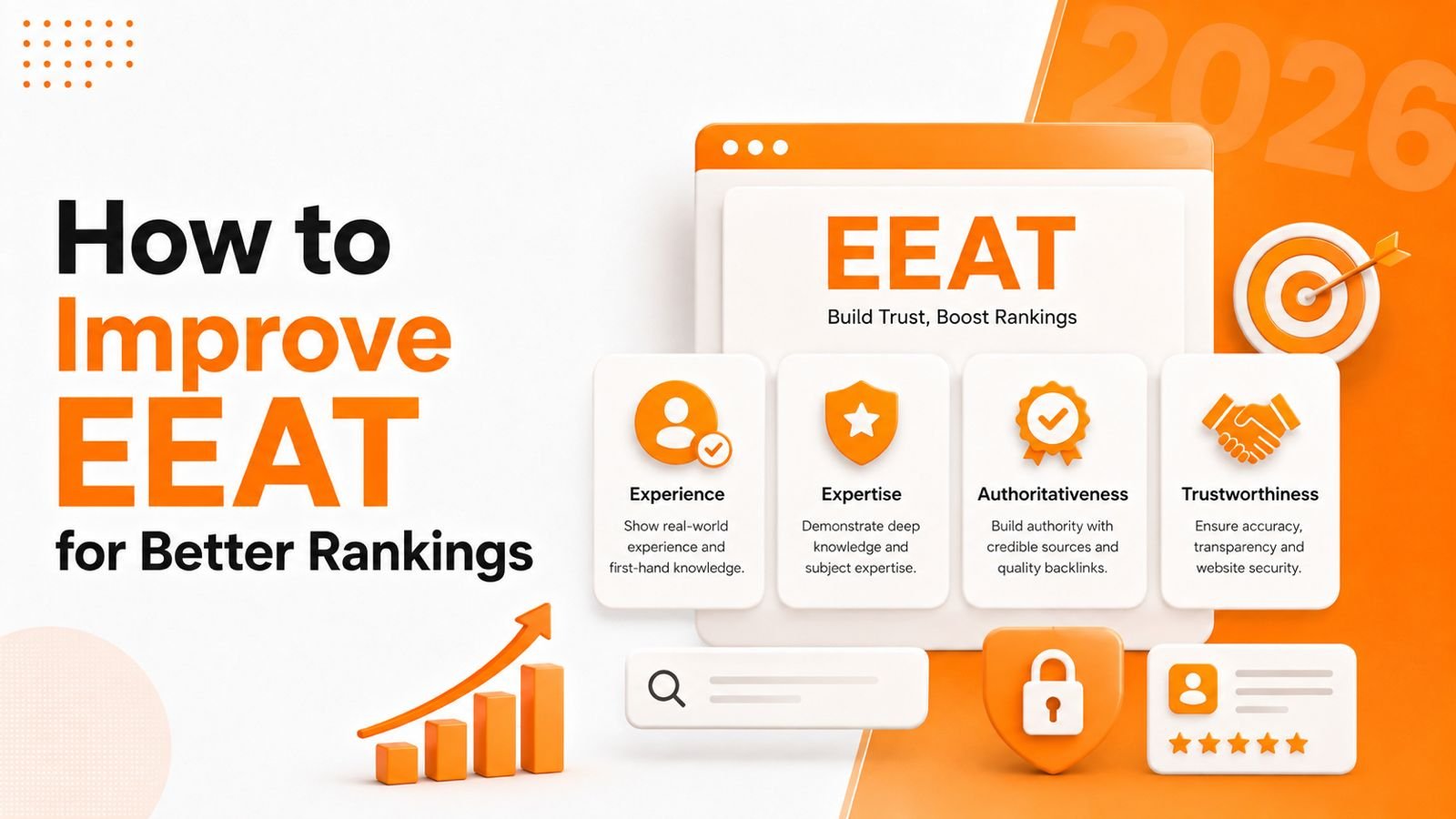
EEAT stands for Experience, Expertise, Authoritativeness, and Trustworthiness. EEAT SEO ensures that Google is able to ascertain whether the site offers credible information. Having quality content, identifiable authorship, relevant experience, and credible reputation makes the site have more solid ground upon which to rank in searches.
Improvement of EEAT SEO cannot be done simply by including a few sentences about the author on the website or displaying trust badges around the website. It requires credibility across the entire site. This means all aspects of the site from its content to its business representation can affect users' perception of the site.
What Is EEAT in SEO?
EEAT is a term used by the Google search quality assessment system for measuring the quality and credibility of the content online. EEAT stands for Experience, Expertise, Authoritativeness, and Trustworthiness.
Experience implies having firsthand knowledge about the subject matter. An individual who has personally used some product or been to some place, tested some service or had a chance to tackle a certain problem, can give practical and valuable information instead of just generic information gathered from various sites.
Expertise involves knowledge and skills. A good piece of content needs to prove that the author knows enough about his or her subject matter and can provide accurate information about it. Expertise can be gained by professionals through working, studying, researching or being involved in the industry for many years.
Authoritativeness is related to the notion of reputation. A site or an author is becoming authoritative when they are recognized, cited and recommended by other reputable sources.
The most crucial component of EEAT is the trustworthiness as the user needs to feel safe while using some information found online. It can be achieved due to providing accurate information, detailed business information, secure site, contact details, honest statements and proper citations.
Why EEAT Matters for Google Rankings
Google is interested in providing relevant and reliable results. If multiple websites contain similar information, the one that has better experience, expertise, authority, and trust is more advantageous.
But it cannot be viewed as just another ranking factor where you can get a high score and instantly occupy the top position. Google utilizes various factors to analyze the quality of a page and the reputation of the whole website.
Therefore, the optimization of EEAT is nothing more than improving the quality of the website for Google and its users. If a person finds credible information, understands the source, sees proof of statements, and trusts the website, he or she will definitely stay on it longer and return.
Businesses can use this approach for conversions. A person might be reluctant to call the company whose website contains no information on the author or business itself, lacks credible content, and makes claims without providing proof. A trusted website eliminates many such problems.
How to Improve EEAT on Your Website
The most effective method of increasing EEAT is creating a valuable and transparent website. It starts from the content. Each valuable page must have its function and provide answers to questions users are asking.
Do not write articles on topics which have search volume just because they have it. Try to find out what users want to know searching this topic. Provide users with valuable information, clarify complicated issues and offer useful details showing your expertise.
First-hand experience adds value to the content. For example, if you write about a product, tell about how it works. Write practical examples of work of a service and share your experience of solving customers' problems.
Such content will be more valuable for users than one which is written just like all others found in internet.
Build Strong Trust Signals
Trust Signals will inform the visitors about legitimacy and reliability of a website. They may be particularly helpful for the websites requiring users to submit personal data, to pay for something or take some action based on the information provided.
An About Us page will provide the visitors with information about the owners of the website. Other elements of credibility include contact options, business information, customer support services, information about the privacy policy, terms and conditions of use and secure payment methods.
Credibility should also be reflected in the content. When you state something, back it up with reliable evidence if necessary. Reliable sources should be used for any statistic, research, industry information, and so on.
Reviews and testimonials can also build credibility when they are authentic and honest. However, you should keep in mind that your aim is not to include as many credibility elements as possible, but to provide the visitors with enough information.
Strengthen Your Author SEO
Author SEO is another important aspect to build credibility. It would be necessary for readers to understand who the creator of the article is and why he or she is qualified enough to write about the particular subject.
An author biography can contain the information about the writer's name, professional biography, area of expertise, experience and links to other useful articles. In case of a specific subject, there should be also provided some qualifications and professional experience if necessary.
Author biographies are not supposed to be created for the purposes of search engines but to make readers understand who is writing about what.
Thus, it is very helpful for the reader to know the biography of the author. For instance, it is better if an article about accounting is written by an accountant and an article about technologies is written by a developer.
It would also be necessary for the author to be relevant to the subject. The use of one single generic author name for all the articles does not contribute to the transparency of the website.
Follow Google Quality Guidelines
Observing the Google Quality Guidelines from Google will assist in getting a better idea of how high-quality search results should look. This guideline is meant for search quality raters, and it gives some helpful insights regarding the criteria used to determine page quality, reputation, content purpose, and user satisfaction.
The first thing one can learn from this guide is that content should be made for users, and not just for manipulating search results.
There should be a purpose of the page, and useful information should be given. It means that misleading content, copied, poorly researched and irrelevant content will lead to problems with page quality.
This is why an effective SEO strategy should consist of not only keyword research but also be useful. Keywords can assist search engines to comprehend the page, while the content will satisfy users.
Create Helpful and Reliable Content
The content needs to be able to give the answer to the core question at once and then give enough details for the person to understand the matter. Do not use repetition without reason and do not make long articles out of short topics to make the text longer.
Use easy words if possible. When using industry terms, explain them and structure the information well with the help of headings.
Also, remember that accuracy matters just as much as good content. Double-check all your facts before publishing them, update any outdated information and even recheck your old articles if you see some important changes.
Examples, practical experience, expertise, explanations – all of these add extra value to the content. This way you give the reader some additional information which he cannot find just by reading the same base information on several other sites.
Improve Website Experience and Transparency
The quality of content alone does not make up a credible website; the user experience is just as crucial.
Your website needs to be intuitive, optimized for mobile usage, fast-loading, and easily allows visitors to get the information they need. Users mustn't have to look through various pages to find out who runs the website and how to reach the company.
Well-designed navigation, legible font size, operational links, safe browsing, and an attractive layout can all help create a positive experience for the user.
Transparency is equally important. If you have a website selling products or services, disclose information about prices, policies, delivery terms, and other key conditions. Do not make empty promises that cannot be fulfilled by your company.
Your website is not going to conceal any information from its visitors. It makes information relevant to users clear and comprehensible.
Common EEAT Mistakes to Avoid
One of the mistakes that websites often make is considering EEAT to be some kind of checklist. Having an author box, several testimonials, and an About page does not guarantee that the website is going to be credible.
Publishing plenty of content but not providing any value is one of the things that need to be avoided. Even if the pages have keywords on them, they may lack the reason why people should use this particular resource.
The last thing that needs to be avoided is outdated content. Something that used to be true several years ago may be not true anymore. Content review helps to keep the quality level high.
There are also other mistakes that need to be avoided: overstated claims, false reviews, no authorship, plagiarism, and unsupported statistics.
How to Measure EEAT Improvements
EEAT is not one single metric to be calculated. Rather, you should look for a few different indicators showing that your website is getting more authoritative and trustworthy.
Organic traffic, visibility in search results, branded searches, user engagement, repeat visits, backlinks, mentions, reviews, and conversions can give you useful information. Content performance can help to identify popular and engaging topics.
It is important to keep in mind that it may take some time. Authority and trust are built over time, not created by a single SEO trick.
Final Thoughts
Enhancing EEAT, at its core, is about establishing trustworthiness for the website. The combination of relevant content, experience, credible writers, source reliability, business transparency, and usability all contribute to achieving trustworthiness.
Rather than looking for any quick solutions, it is crucial to concentrate on delivering real value. The more the website offers credible and reliable information, the more solid the foundation for successful search results ranking becomes.
Blog FAQs
Frequently Asked Questions
EEAT stands for Experience, Expertise, Authoritativeness, and Trustworthiness. It helps show that your content is reliable and useful.
Create helpful content, show real experience, use trusted sources, and provide clear author and business information.
Trust Signals include reviews, author details, contact information, secure pages, and transparent business policies.
Author SEO shows who created the content and their experience or expertise, helping build reader trust.
Strong EEAT can support better search performance by improving content quality, credibility, and user trust.