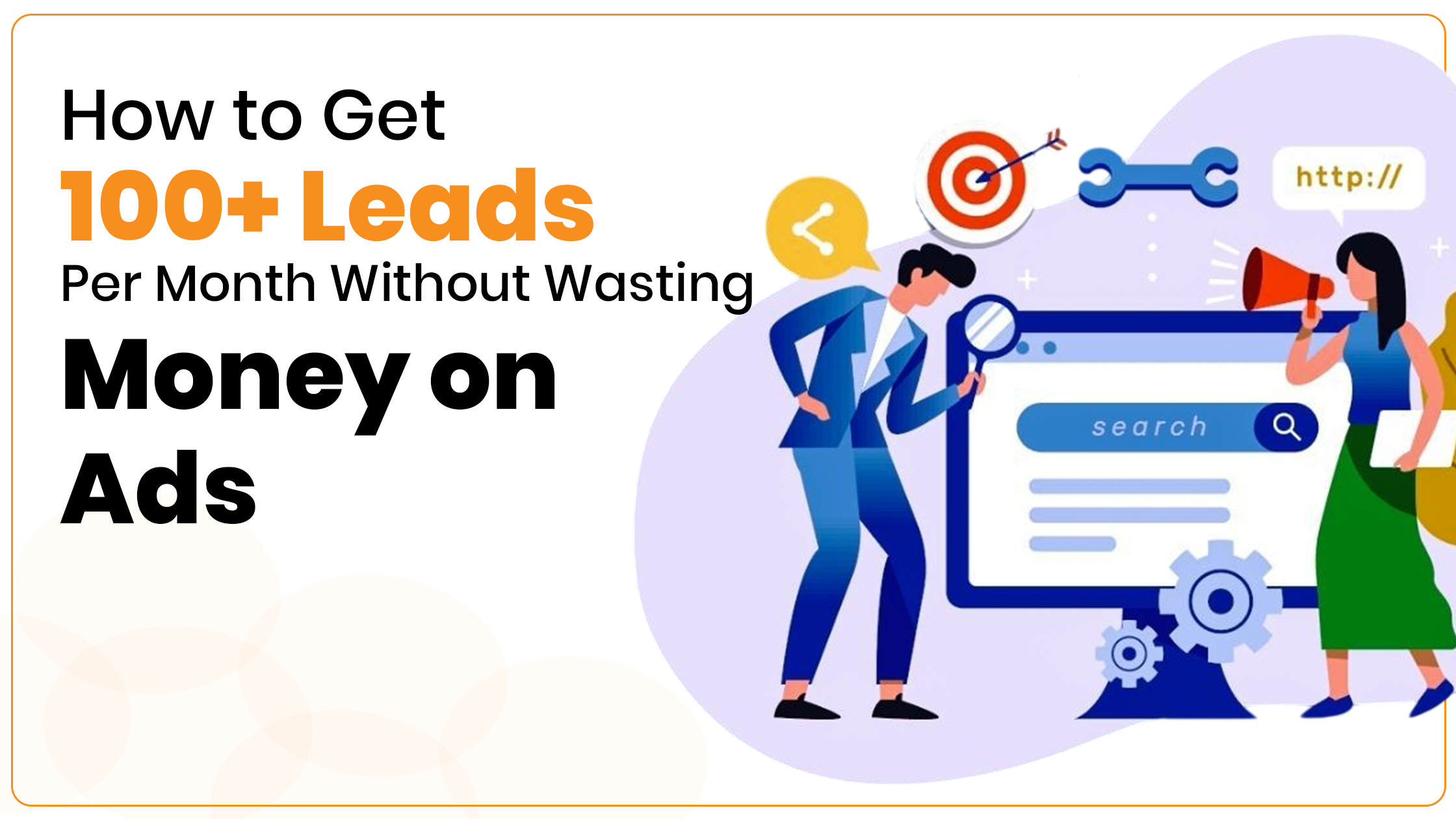
How to Get 100+ Leads Per Month Without Wasting Money on Ads
That is what happens when ads are your only source of leads. They work, but only while you are spending.
And lately, it feels like you have to spend more just to get the same results. That is not a mistake on your end. The market has changed.
This guide is about building something more stable. A system that keeps bringing in leads even when you are not running ads.
Why Ads Alone Will Always Let You Down
Paid ads are not the problem. Over-reliance on them is.
They give you quick visibility, but they do not build anything that lasts. The moment you stop spending, your pipeline dries up. That is not a growth system. That is a dependency.
What Actually Happens When You Rely Only on Ads
- You are renting attention, not building it
Every rupee you spend brings in traffic for that moment. Once the budget stops, so do the leads. Nothing carries forward. - Your costs slowly start increasing
As more businesses compete for the same audience, you end up paying more for similar results. Scaling becomes expensive. - Lead quality is unpredictable
Many of these leads are cold. They are still exploring options and have no real connection with your brand. - You get stuck in a cycle
Campaign on, leads come in. Campaign off, everything drops. It becomes a loop that is hard to break. - There is no long-term asset being built
No content, no search presence, no recall. Just short bursts of traffic that disappear as soon as you stop spending.
The 3-Part Lead Engine Framework
Before jumping into any tactic, here is the framing that actually matters. Stop thinking about lead generation as a campaign you run and start thinking about it as a machine with three moving parts:
Part 1: Discoverability. Can the right people find you when they are actively looking for what you offer? This is where SEO, Google Business Profile, and content marketing live.
Part 2: Conversion. When the right people do find you, does your website give them a reason to act? This is landing page optimization, social proof, and clear calls-to-action.
Part 3: Nurture. Not everyone who finds you today is ready to buy today. 73% of B2B buyers are not sales-ready when they first become a lead. Do you have a way to stay in their world until they are?
Most businesses obsess over Part 1 and completely neglect Parts 2 and 3. They drive traffic to a generic homepage with no clear offer, no trust signals, and no follow-up sequence, then wonder why leads do not convert. The machine only works when all three parts are running.
5 SEO Strategies That Attract ACTUAL Buyers And Not Just Visitors
Traffic is a vanity metric. What you actually want are visitors who are actively looking for a solution. That requires a different approach to SEO than most blogs will tell you.
1. Target Keywords by Intent, Not Volume
Most businesses chase high-volume keywords and end up attracting the wrong audience. What actually matters is intent.
There are three types of keywords you should focus on:
- Informational keywords
Example: “what is B2B lead generation”
These attract early-stage users who are still learning. They help you build visibility and trust, but conversions are usually low at this stage. - Comparative keywords
Example: “best CRM for Indian SMEs”
These bring in people who are actively evaluating options. They are closer to making a decision and more likely to convert. - Transactional keywords
Example: “B2B lead generation agency Delhi”, “hire content writer for SaaS”
These are high-intent searches. The user is ready to take action, which makes these the most valuable keywords to target first.
Instead of going after broad terms, map your services to transactional and comparative keywords using tools like Google Search Console, Ahrefs, or Ubersuggest.
A keyword like “B2B content marketing agency Bengaluru” may bring less traffic than “content marketing”, but the people searching for it are far more likely to become clients.
2. Build Pages With Genuine Depth
Google's algorithm in 2026 heavily rewards pages that demonstrate real expertise and match search intent precisely. That means your service pages need to answer the actual questions your clients are typing, not just list your features in bullet points. Cover the problem, the solution, the process, the results, and the objections. Then answer follow-up questions with an FAQ section.
3. Optimize for Core Web Vitals
Your pages need to load in under three seconds on mobile. Google's ranking signals include page experience metrics, and a slow site is a leaky bucket: all your SEO work sends traffic in, and your load time sends it straight back out. Use Google PageSpeed Insights to identify what is dragging you down.
4. Use Structured Data on Every Key Page
Structured data, or schema markup, helps Google understand your content better.
Without it, your page is just text. With it, you add context that can get you featured in rich results like FAQs and summaries.
This directly impacts your visibility on search. If competitors are using it and you are not, they are more likely to win those top spots.
Start with schema for services, FAQs, reviews, and business details. It is a small step that makes a big difference.
5. Earn Backlinks That Actually Move Rankings
Backlinks from relevant, authoritative sites remain one of the strongest ranking signals. Guest posts on niche industry blogs, listings in respected directories, and genuine relationships with complementary businesses are the most sustainable path. Ten links from respected industry sources will do more than five hundred from random directories.
How to Turn Your Google Business Profile Into a Lead Machine
If you serve local clients, your Google Business Profile is often the first place people find you. Treat it like a live marketing channel, not a one-time setup.
Step 1: Fully Optimize Your Profile
Start with the basics, but do them properly.
- Choose the most relevant primary category
Be specific. “B2B Performance Marketing Agency” works better than a broad label. - Fill out every section available
Services, service areas, hours, products, attributes, and description. - Write a clear, keyword-focused description
Explain what you do, who you serve, and where you operate.
A complete profile builds trust. An incomplete one gets ignored.
Step 2: Keep Your Profile Active
An active profile signals that your business is real and responsive.
- Post updates regularly
- Share quick wins, insights, or service highlights
- Add fresh photos
You do not need long posts. Just stay consistent.
Step 3: Build and Manage Reviews
Reviews shape how people perceive you before they even contact you.
- Ask for reviews after every successful project
- Keep it simple by sharing a direct link
- Do not rely on memory. Prompt clients at the right moment
Also, respond to every review.
- Thank people for positive feedback
- Handle negative reviews calmly and clearly
People notice how you respond, not just what is written.
Step 4: Make It Easy to Reach You
The easier it is to contact you, the more leads you will capture.
- Turn on messaging
- Keep your phone number active
- Respond quickly
A slow response often means the lead moves on.
Step 5: Avoid Common Mistakes
A few small mistakes can hurt your visibility over time:
- Constantly changing your business name or category
- Stuffing keywords into your business name
- Leaving the profile inactive for long periods
Consistency matters here. Small, steady updates work better than sudden changes.
4 Content Formats That Actually Convert
Most business blogs explain concepts without showing anyone how to apply them. That kind of content ranks poorly and converts even worse. Here are the four formats that work.
1. Comparison and "vs." Content
Posts like "HubSpot vs Zoho CRM for Indian SMEs" or "Freelance vs Agency for B2B Content" attract buyers in the active evaluation stage. These readers have high purchase intent and are looking for someone to help them decide. This is some of the easiest content to rank for because most companies are too afraid to write it.
2. Problem-Specific Guides
Rather than writing "A Guide to Lead Generation," write "How to Generate 50 Qualified Leads Per Month as a B2B IT Consultant Without a Sales Team." The more specifically the title describes a reader's actual situation, the more qualified the traffic you attract.
3. Case Studies With Real Numbers
In B2B especially, a well-documented case study with specific metrics, a clear before-and-after, and an honest account of the process does more conversion work than any amount of brand content. If you have delivered results, document them properly.
4. Gated Lead Magnets
A checklist, a template, a free audit, a short framework. These work best when they solve one very specific problem. A "B2B Content Strategy Template for SaaS Companies" will outperform a generic "Marketing Guide" every time because it signals to the right person that this was built for them. Gate these behind an email capture form to grow a list you can nurture over time.
Landing Page Optimization: Where Most Leads Quietly Die
You can get everything else right and still lose leads on your landing page.
Most pages do not fail because of design. They fail because the message is unclear and there is too much friction.
What a High-Converting Landing Page Looks Like
- A clear, specific headline
Skip generic lines like “We Are a Leading Agency.”
Tell people exactly what you do and who it is for. - Social proof above the fold
Testimonials, client logos, or real results.
People trust other people more than they trust you. - One focused call-to-action
Do not split attention with multiple options.
Pick one action like booking a call or downloading a resource. - Minimal form fields
Ask only what is necessary. Name and email is often enough to start. - Mobile-first experience
Your page should load fast and work smoothly on a phone.
If it feels slow or broken, the lead is gone.
B2B Lead Generation in India: What Works Here Specifically
B2B lead generation in India works differently. Buyers here take their time. They research, compare, and validate before reaching out.
That means the businesses that stay visible and credible over time are the ones that win.
What Actually Works
- Consistent, credibility-driven content
Buyers check case studies, LinkedIn profiles, and proof before making a decision. If you are not showing your work, you are not in consideration. - LinkedIn presence over cold outreach
Posting insights, engaging with others, and building familiarity works far better than sending cold pitches. By the time you reach out, people should already recognize your name. - Fast follow-ups on WhatsApp
Once a lead comes in, speed matters. A quick, human follow-up on WhatsApp can move the conversation forward much faster than email. - Local SEO still matters
Even in B2B, people search with location intent. Pages targeting specific cities and a well-optimized Google Business Profile can bring steady inbound leads. - Referrals as a growth channel
Strong relationships and a simple referral ask can quietly become one of your most consistent sources of leads. Most businesses do not systemize this, which is why it works.
If you are looking for a team that focuses on real results instead of just reports, you can explore this:
👉 Digital Marketing Agency in Delhi
Blog FAQs
Frequently Asked Questions
Meaningful traction typically appears between 3 and 6 months, depending on niche competition and execution consistency. That said, optimizing your Google Business Profile and targeting low-competition, high-intent keywords can show results much faster, sometimes within weeks.
Start with your Google Business Profile (free), a simple lead capture on your website, and one piece of content per week targeting a specific question your clients are searching for. Add a short email nurture sequence. These three things, done consistently, will outperform sporadic ad spending every time.
Longer sales cycles, a research-heavy buyer who checks LinkedIn and case studies before making contact, stronger influence of referrals and personal recommendations, and the importance of WhatsApp as a follow-up channel. These dynamics make content credibility and relationship-building especially high-leverage compared to pure ad spend.